
Your Cart is Empty
What Is Mother's Day? Meaning, Origin, and Why It Matters
21 Apr, 2026 9
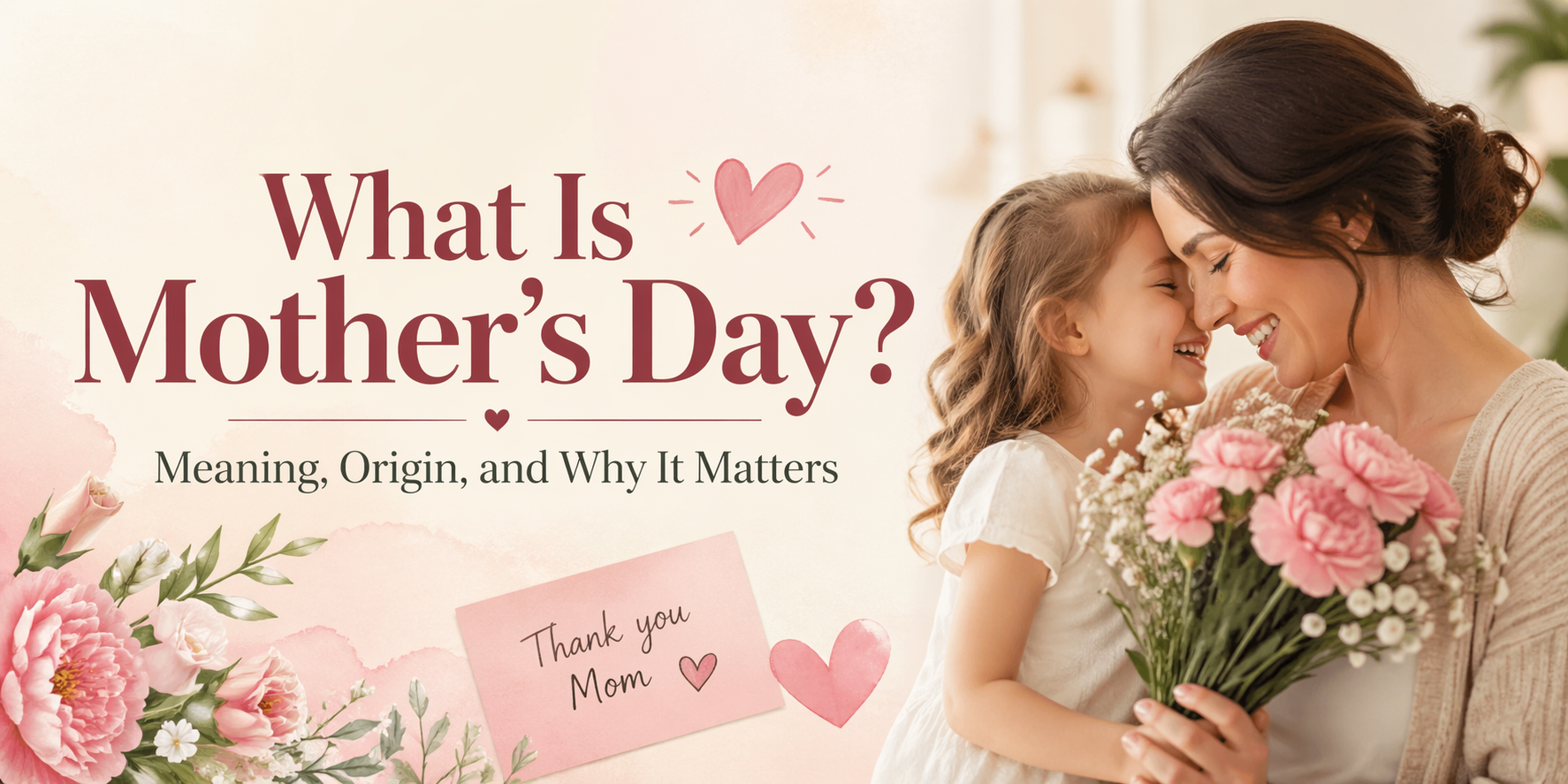
Discover the true meaning and history behind Mother's Day — from its ancient roots to the modern celebration honoring mothers worldwide.
Every year on the second Sunday of May, millions of people around the world pause to honor the most important woman in their lives — their mother. But what exactly is Mother's Day, and where did this heartfelt tradition come from? Understanding the origins and significance of Mother's Day helps us appreciate it far beyond flowers and greeting cards.
---
What Is Mother's Day?
Mother's Day is an annual holiday dedicated to celebrating mothers, motherhood, and the influence of mothers in society. It is a day to express gratitude, love, and appreciation for the sacrifices and care that mothers provide throughout their children's lives.
In most countries, including the United States, Canada, Australia, and many parts of Europe and Asia, Mother's Day falls on the second Sunday of May. However, the date varies by country — for example, the United Kingdom and Ireland celebrate "Mothering Sunday" on the fourth Sunday of Lent, typically in March.
---
The Origins of Mother's Day
Ancient Roots
The concept of honoring motherhood is far from modern. Ancient civilizations held festivals to celebrate mother goddesses. The Greeks honored Rhea, the mother of the gods, while the Romans celebrated Cybele, a powerful mother goddess, during a festival called Hilaria. These early traditions laid the symbolic foundation for what would eventually become Mother's Day.
The Christian Influence: Mothering Sunday
In 16th-century England, "Mothering Sunday" emerged as a Christian tradition. Observed on the fourth Sunday of Lent, it was originally a day for people to return to their "mother church" — the main church in their region. Over time, the holiday evolved into a day when children, many of whom worked as domestic servants, were given a day off to visit their own mothers and bring them gifts, often including a traditional cake called "simnel cake."
Anna Jarvis and the Modern Mother's Day
The Mother's Day we recognize today was largely shaped by one determined American woman — Anna Jarvis. After her own mother, Ann Reeves Jarvis, passed away in 1905, Anna set out to honor her memory and recognize the contributions of all mothers.
On May 12, 1907, Anna held a memorial service at St. Andrew's Methodist Church in Grafton, West Virginia — widely considered the first official Mother's Day celebration. She campaigned tirelessly for the holiday to receive national recognition, and her efforts paid off. In 1914, U.S. President Woodrow Wilson signed a proclamation declaring the second Sunday of May as the national Mother's Day holiday.
Ironically, Anna Jarvis later became deeply critical of the commercialization of the holiday she helped create, protesting what she saw as the exploitation of a day meant for sincere, personal gratitude.
---
The Meaning and Significance of Mother's Day
Beyond its historical roots, Mother's Day carries profound emotional and cultural significance:
1. A Day of Gratitude
Mother's Day offers a structured moment to step back from the busyness of everyday life and sincerely thank mothers for their tireless dedication, unconditional love, and countless sacrifices.
2. Recognizing Unsung Labor
Motherhood involves enormous physical, emotional, and mental labor — much of it invisible and unpaid. Mother's Day acknowledges this contribution and gives it the recognition it deserves.
3. Strengthening Family Bonds
For many families, Mother's Day is a rare occasion to come together, share a meal, exchange stories, and reinforce the bonds that make a family strong.
4. Honoring All Forms of Motherhood
Modern celebrations of Mother's Day have expanded to recognize not only biological mothers but also stepmothers, adoptive mothers, grandmothers, and any maternal figure who has played a nurturing role in someone's life.
5. Reflecting on Grief and Loss
For those who have lost their mothers or are struggling with difficult maternal relationships, Mother's Day can also be a time of reflection, healing, and remembrance.
---
How Mother's Day Is Celebrated Around the World
While the core sentiment remains the same, Mother's Day traditions vary across cultures:
- United States & Canada: Families give flowers (especially carnations, Anna Jarvis's symbol), cards, and gifts. Brunches and family dinners are common.
- United Kingdom: Mothering Sunday is celebrated with flowers and the traditional simnel cake.
- Mexico: Mother's Day (Día de las Madres) on May 10 is a major celebration with music, large family gatherings, and serenades.
- Japan: Children give carnations and handmade gifts; the day emphasizes appreciation and reflection.
- Ethiopia: Mothers are celebrated with a multi-day festival called Antrosht, featuring songs, food, and family reunions.
---
Conclusion
Mother's Day is more than a commercial holiday — it is a deeply meaningful tradition rooted in centuries of reverence for the nurturing power of mothers. Whether you celebrate with a handwritten card, a warm embrace, or a quiet moment of gratitude, the most important thing is that the sentiment behind it is genuine.
This year, take a moment to truly honor the mothers in your life — not just for what they do, but for who they are.
---
Call to Action
Did you find this article helpful? Share it with someone who wants to make their Mother's Day celebration more meaningful. And if you are looking for thoughtful gift ideas or heartfelt messages, explore our other guides.

Share on Facebook

Share on X

Share on Pinterest
0 Comment(s)