
Your Cart is Empty
The Best Family Games to Play Together on Mother's Day 2026
27 Apr, 2026 6
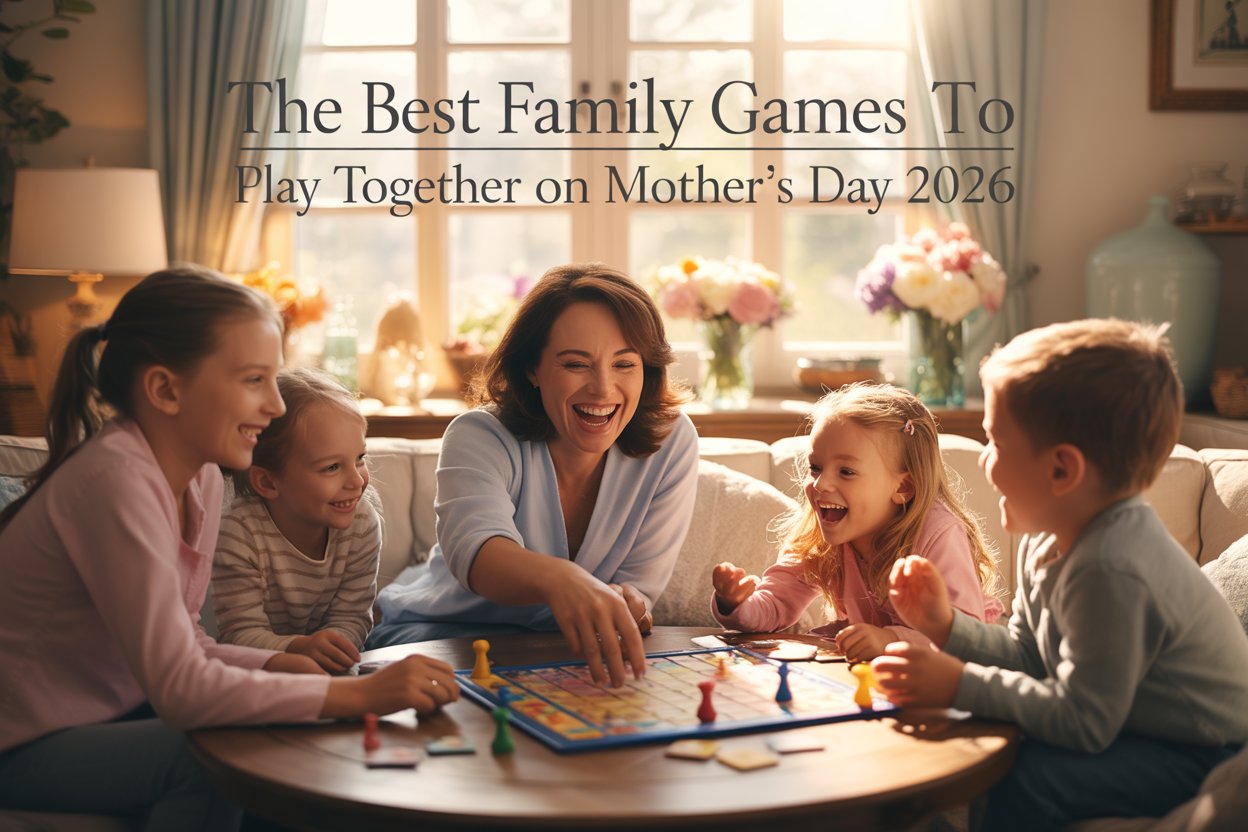
The best Mother's Day does not have to be expensive. It does not require a reservation, a spa package, or a carefully curated gift. Sometimes the most memorable version of the day is the simplest one — everyone together, no screens, no distractions, just the kind of laughter that only happens when a family is genuinely playing together.
Games have a way of doing that. They lower the guard, create shared moments, and produce stories that get retold for years. The afternoon she beat everyone at Scrabble. The round of charades that made someone cry laughing. The trivia game where the youngest player turned out to know the most.
This guide covers the best games to play on Mother's Day — organized by age group, energy level, and setting — so you can find exactly the right fit for your family and make the day something she will actually remember.
Before You Start — A Few Ground Rules for the Day
Whatever games you choose, keep a few things in mind to make sure the day feels celebratory rather than competitive.
Let her choose first. Offer two or three options and let her pick. It is her day, and the game she enjoys most is the right game regardless of anyone else's preferences.
Keep the tone light. This is not the day for anyone to get aggressively competitive or sulk over a loss. Remind younger kids — and any adults who need reminding — that the goal is fun, not winning.
Plan for breaks. If you are playing with mixed ages, build in snack breaks, bathroom breaks, and moments to just sit together without structure. The games are the frame, not the whole picture.
Have a backup. If the first game falls flat or someone loses interest, have a second option ready so the momentum doesn't die.
Classic Board Games — Timeless for a Reason
Some games have been on tables for decades because they genuinely work. They travel well across age groups, they do not require setup, and almost everyone already knows the rules. These are the anchors of a family game day.
Scrabble is a strong choice if she enjoys words. It moves at a comfortable pace, allows for conversation between turns, and rewards the kind of quiet cleverness that many mothers possess in abundance. If the age range at the table is wide, allow younger players to use a dictionary or a phone to look up words without penalty.
Trivial Pursuit, particularly the Family Edition, works well across generations. The Family Edition divides questions by age group so younger players are not disadvantaged. It tends to produce surprising moments — the eight-year-old who knows more about pop culture than anyone expected, the grandmother who dominates the history category without breaking a sweat.
Clue is a perennial favorite for families with kids aged eight and up. It requires deduction, a little strategy, and enough suspense to keep everyone engaged. It also tends to run about an hour, which is the right length for a holiday afternoon — long enough to be satisfying, short enough to leave room for everything else.
Monopoly is a genuine classic, though a word of caution: it runs long and can get heated. If your family handles competition well and has a full afternoon to fill, go for it. If you are short on time or have players who take losing personally, choose something else.
Catan is an excellent choice for families with teenagers and adults. It is collaborative enough to stay social but strategic enough to stay interesting. If no one in the family has played before, plan for a thirty-minute rules explanation before you start — once everyone understands it, it is one of the best games on this list.
Card Games — Easy to Set Up, Hard to Put Down
Card games are underrated for family gatherings. They require almost no setup, they are portable enough to play at the kitchen table or outside on the patio, and many of them are genuinely funny once everyone gets going.
Uno is the easiest entry point if the age range at the table includes young children. The rules are simple, the gameplay is fast, and the moments of tension — the Draw Four, the sudden reversal — produce genuine drama without requiring any particular skill. Play several rounds and let her stack wins.
Skip-Bo is a sequencing card game that is calmer and slightly more strategic than Uno. It works particularly well for families who want something engaging without too much chaos. It plays well with two to six players and tends to appeal to mothers who enjoy a little quiet strategy.
Phase 10 sits between Uno and a full board game in terms of complexity. Each player works through ten phases of specific card combinations, and the variation keeps every round feeling slightly different. It runs longer than Uno but shorter than most board games — a good middle-ground option.
Rummy, in any of its variations, is worth considering if the family includes older players or grandparents who grew up playing card games. It is familiar, social, and the kind of game where conversation flows naturally between turns. Classic Gin Rummy with just two players also works beautifully if she wants a quiet game with just one child or one partner while others rest.
Exploding Kittens is a modern card game that has quickly become a family staple. It is fast, funny, and slightly absurd in the best possible way. The rules take about five minutes to learn and the gameplay tends to produce genuine laughter. It works best with four to six players and keeps everyone engaged from the first card to the last.
Party-Style Games — For When the Energy Is High
If the family is larger, includes teenagers or young adults, and the energy in the room is high, party games are the right call. These are the games that produce the most noise, the most laughter, and the best stories.
Pictionary is a drawing-and-guessing game that works for almost any age. Divide into teams, rotate the artist, and watch what happens when someone has to draw a concept like jealousy or parallel universe in sixty seconds. No artistic skill is required — in fact, the worse the drawing, the funnier the round.
Charades needs no materials at all — just willing participants and a list of prompts. Use a free charades app on a phone to generate prompts automatically, or write your own on slips of paper. Customize the categories to things she loves: her favorite movies, books, travel destinations, or family memories. A round of charades that draws on inside jokes and shared history is one of the most connective things a family can do together.
Taboo is a word-guessing game where the catch is that you cannot use the most obvious descriptive words when giving clues. It is fast-paced, requires quick thinking, and almost always devolves into good-natured arguing over whether a clue was technically legal. It plays best with six or more people divided into two teams.
Heads Up is a phone-based game from the Ellen DeGeneres show that has become a staple at family gatherings. One player holds the phone to their forehead with a word or name on the screen, and the rest of the group gives clues. It is portable, endlessly customizable, and works particularly well with mixed ages because the categories range from simple to challenging.
Jackbox Party Pack, if you have a television and a streaming device, is a collection of digital party games that everyone plays using their smartphones as controllers. Games like Quiplash, Fibbage, and Drawful are genuinely hilarious and can accommodate large groups with ease. If the family is comfortable with technology, this is one of the highest-fun options on the list.
Outdoor Games — For Families Who Want to Move
If the weather cooperates — and in much of the United States, early May is genuinely beautiful — take the games outside. Fresh air, a little movement, and the natural setting make outdoor games feel more alive than anything played at a table.
Bocce Ball is one of the best outdoor games for Mother's Day because it is relaxed enough for all ages, requires no particular athleticism, and allows for plenty of conversation between throws. It works on a lawn, a driveway, or a park path. If you do not own a set, they are inexpensive and widely available at Target or Amazon.
Cornhole is a staple of American outdoor gatherings for good reason. It is simple enough for young children, satisfying enough for competitive adults, and the pace of play keeps things social rather than intense. Set up teams or play a round-robin tournament and let her defend her title across multiple games.
Croquet is a slightly more elegant option that works beautifully in a larger yard. It runs long and requires a flat surface, but if the conditions are right it is one of the most enjoyable outdoor games available for mixed-age groups. It also tends to appeal to mothers who appreciate something a little classic.
Badminton or Volleyball with a portable net are great options if the family includes children and teenagers with more energy to burn. Keep the rules casual — rally-scoring only, no strict serving rules — so the focus stays on movement and fun rather than competition.
Lawn Bowling and Ladder Toss are good alternatives if the yard is smaller or the group is more relaxed. Both are easy to set up, easy to learn, and produce enough scoring tension to stay interesting without becoming stressful.
If the family is near a park, a simple game of frisbee, a nature scavenger hunt, or a walk followed by a picnic with cards or travel-sized games counts fully as a family game day. The setting matters less than the togetherness.
Quiet Games — For Smaller Groups or Slower Afternoons
Not every Mother's Day calls for noise and high energy. If the group is small, if she prefers something calm, or if the afternoon is winding down and the family wants something that allows for conversation, these quieter options are worth considering.
Bananagrams is a fast-paced word tile game that plays like solo Scrabble but with everyone building at the same time. It is compact enough to set up on any surface, plays in about fifteen minutes per round, and rewards a genuine vocabulary without being exclusionary.
Codenames is a team-based word association game that is deceptively simple to learn and surprisingly deep to play. One player gives single-word clues to lead their team to the right cards on the board. It plays well with four to eight people, tends to produce a lot of quiet concentration punctuated by bursts of excitement, and is genuinely one of the best-designed games of the last decade.
Sequence is a board-and-card hybrid that combines strategy with a bit of luck. It is calm enough to play over a long conversation, competitive enough to stay interesting, and accessible enough to include players of almost any age above six or seven.
Dominoes, in its many forms, is a classic that works beautifully across generations. Mexican Train Dominoes in particular is a group-friendly format that accommodates up to eight players and keeps the pace moving. It is relaxed, conversational, and deeply familiar to many grandparents and older family members who will appreciate the choice.
Jigsaw Puzzles are not technically a game, but as a shared family activity on a slow Mother's Day afternoon they are worth mentioning. Put on her favorite music or her favorite movie in the background, spread a puzzle across the coffee table, and let the afternoon pass in that particular kind of comfortable, productive silence that only happens when everyone is working toward the same thing.
Making It About Her
Whatever you choose, the most important detail is this: the games are a backdrop. The real gift is the time.
She does not care whether you played the most sophisticated game or the simplest one. She cares that everyone was there. That no one was distracted. That there was laughter. That at some point during the afternoon, someone looked at her and said something real.
Before the first game starts, take a moment as a family. Go around the table and let each person say one thing they love about her — one specific, genuine thing, not a generality. It takes five minutes and it sets the tone for the entire day.
Then play. Laugh too loud. Argue good-naturedly over the rules. Let her win a round or two, or watch her win them all on her own because it turns out she is better at this than anyone knew.
Give her a day that she will bring up next year, and the year after that, as the one where everyone was together and it was exactly enough.
That is the whole game. And it is one worth playing every chance you get.
Happy Mother's Day, 2026.

Share on Facebook

Share on X

Share on Pinterest
0 Comment(s)