
Your Cart is Empty
Things You Only Understand When You Become a Mother
23 Apr, 2026 12
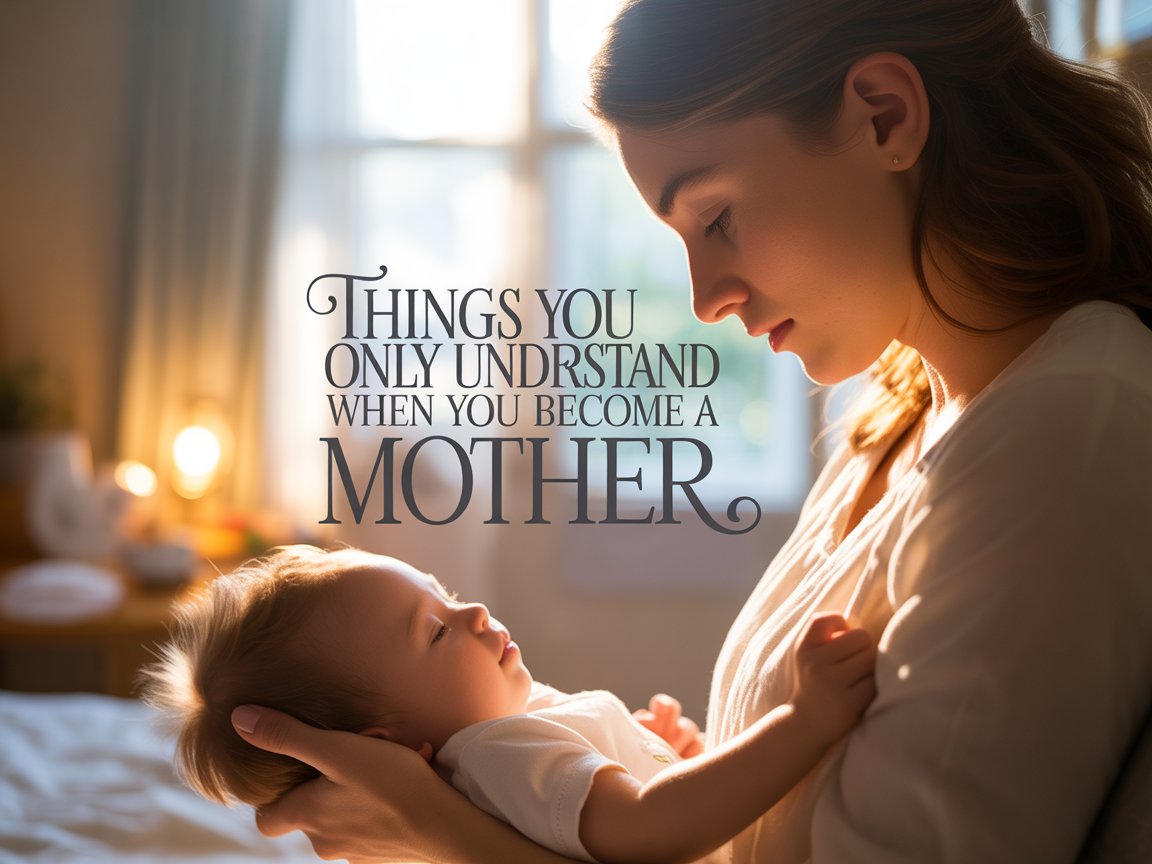
Before you became a mother, you thought you understood love.
You had loved people deeply — a partner, a friend, a parent, a pet. You knew what it felt like to miss someone, to worry about someone, to want good things for someone more than you wanted them for yourself.
And then you became a mother.
And everything you thought you knew about love quietly stepped aside to make room for something larger, stranger, and more consuming than anything you had ever felt before.
This is a list of the things no one could have told you. The things that only make sense from the inside. The things that, if you are a mother reading this today, you already know in your bones.
You understand now why your own mother always looked tired — and why she never complained about it.
There was a version of you, years ago, who noticed the shadows under her eyes and didn't think much of it. She was just tired. Adults were tired sometimes.
Now you know what that tiredness actually was. It wasn't one bad night. It was years of sleeping with one ear open, of waking before anyone else, of carrying the invisible mental load of a household in the back of your mind every single hour of every single day — even the hours when you were supposed to be resting.
And the reason she never made you feel the weight of it is the same reason you don't make your own children feel it now. Because that is what mothers do. They absorb it quietly. They get up anyway. They make the morning feel ordinary even when they are running on almost nothing.
You understand that now. And you are sorry it took you this long.
You understand that worry is not a phase — it is a permanent condition.
Before you had children, you assumed the worry would peak at some point and then level off. The newborn stage would be the hardest, you told yourself. Once they were sleeping through the night, once they were walking, once they were in school, once they were a little older and a little more capable — the worry would ease.
It doesn't ease. It evolves.
The things you worry about change shape as they grow, but the feeling underneath never fully goes away. It is not anxiety exactly — though it can feel like that. It is more like a constant, low hum of awareness that someone you love beyond reason is out in the world, vulnerable in ways you cannot always protect them from.
You worry when they are sick. You worry when they are too healthy and quiet because something must be wrong. You worry when they struggle and you worry when things come too easily. You worry about the friends they choose and the roads they will one day drive on and the heartbreaks that are coming for them that you cannot prevent.
You used to think your mother was overprotective. Now you understand she was just paying attention.
You understand what it means to put someone else completely first — not as a sacrifice, but as a choice you make without thinking.
There is a moment in early motherhood — exhausted, touched out, running on no sleep and cold coffee — when you realize that you have not thought about yourself in days. Not in a martyred way. Not in a resentful way. Just factually. Your own needs moved to the back of the line and you did not even notice it happening.
Before you became a mother, you wondered if that kind of selflessness was even real, or whether it was just something people said. Whether anyone truly chose another person's needs over their own without some part of them keeping score.
Now you know it is real. You know it because you live it every day, and most days you don't even register it as a sacrifice. It is simply what love looks like when it is operating at full capacity. It is love without the asterisk.
You understand that the ordinary moments are the ones that matter most.
You spent a lot of time before motherhood waiting for the significant moments — the milestones, the celebrations, the occasions worth documenting. The first step. The first word. The first day of school.
Those moments are real and beautiful. But they are not where motherhood actually lives.
Motherhood lives in the bath time that turned into a splashing contest that soaked the entire bathroom floor and made everyone laugh until they couldn't breathe. It lives in the car ride where they asked a question you weren't prepared for and you had to pull over to answer it properly. It lives in the Saturday morning when they climbed into your bed before the sun was up and fell back asleep pressed against your side, their breathing slow and even, and you lay there completely still because you didn't want to be the reason it ended.
No one takes photos of those moments. They are not the ones that make it onto the highlight reel. But they are the ones you return to, again and again, when you think about what this has been.
You understand why your mother cried at things that seemed like nothing.
A school play. A report card. A photo from years ago found in the back of a drawer. A song that came on in the car at the wrong moment. You used to watch her cry at these things and feel a mixture of confusion and mild embarrassment.
Now you are the one crying in the car.
You cry because they are growing and you are proud. You cry because they are growing and you are not ready. You cry because something small reminded you of something earlier, something softer, some version of them that no longer exists except in memory, and grief and love are sometimes so tangled together that you cannot tell which one is moving through you.
You understand now that your mother was not crying at the thing. She was crying at the time. At how fast it moves. At how much she loved you and how little that love could slow any of it down.
You understand the specific terror of loving something this much.
There is a vulnerability in motherhood that no one fully prepares you for. The moment you hold them for the first time, something shifts in you permanently. You have handed your heart to someone outside your body, someone who will walk out the front door one day, someone the world will not always be gentle with.
You understand now why mothers throughout history have prayed, and bargained, and stayed up watching their children breathe. It is not irrational. It is the entirely logical response to loving something this much in a world that makes no guarantees.
The love is extraordinary. And the terror is the price of it. Most mothers would pay it again without hesitation.
You understand that you are doing a harder job than you ever imagined — and you are doing it better than you think.
On the days when you lose your patience, when you say the wrong thing, when you fall short of the mother you intended to be — you carry it. You replay it. You wonder if you are getting this wrong in ways that will matter later.
Here is what you should also know: the fact that you wonder means you are paying attention. The fact that you replay it means you care. The mothers who are truly failing are not the ones lying awake worrying about whether they are enough. They are the ones who never think about it at all.
You are thinking about it. You are trying. You wake up every morning and you try again, even when the day before was hard, even when you are tired, even when you do not feel like you have anything left.
That is not falling short of motherhood. That is exactly what motherhood looks like.
You understand, finally, what your own mother was trying to tell you all along.
Not with her words — though she said it in those too, on the days when it needed saying. But with her presence. With her habits. With the way she always seemed to know when something was wrong before you said it. With the meals that appeared when you needed them. With the phone calls she made just to hear your voice. With the way she always had room for you, no matter what else she was carrying.
She was telling you, in the only language that really works, that you were loved in a way that had no bottom. No condition. No expiration.
You understand it now because you feel it yourself, aimed at someone else, so large and so constant that some days it almost takes your breath away.
A Final Word
If you are a mother reading this today, on or around Mother's Day — this is for you.
You are seen. Not just for the beautiful moments, but for the hard ones. For the mornings that started before anyone else was awake. For the worries you carried quietly. For the version of yourself you set aside, without ceremony, to make room for someone who needed you more.
You may not hear it as often as you deserve to. But you are doing something extraordinary. Every single day.
And somewhere, someone who calls you Mom already knows it — even if they do not yet have the words to say so.
Happy Mother's Day, 2026.

Share on Facebook

Share on X

Share on Pinterest
0 Comment(s)